E-commerce, AI, and big data are creating new opportunities for Vietnamese businesses to access international markets. However, having a strong product and gaining market visibility are only the first steps. Turning those opportunities into sustainable export orders requires a comprehensive ecosystem that supports businesses throughout the entire process.
Digital platforms and cross-border e-commerce are enabling Vietnamese businesses to connect directly with consumers and international buyers, reducing their reliance on traditional intermediaries.
However, market access does not automatically mean market readiness. A product may quickly gain attention, but to become a serious buying option, a business must still meet expectations for quality, standards, pricing, logistics, production capacity, and customer service.
In other words, technology can open the door to a market, but supply capability determines whether a business can successfully walk through it.
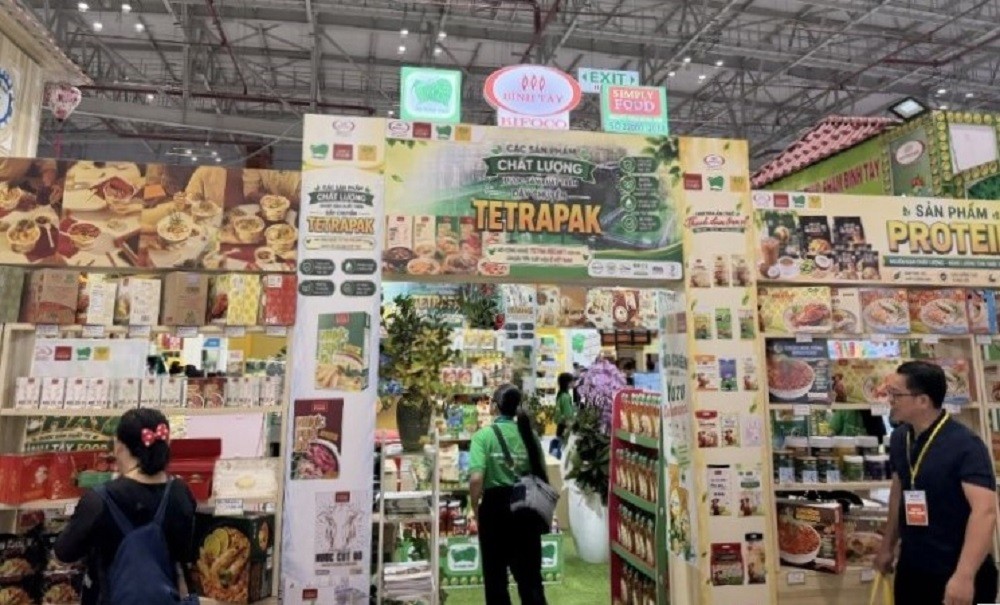
As business becomes increasingly digital, trade promotion is evolving as well. Rather than relying solely on trade shows, advertising, and product introductions, data can help answer critical questions more precisely:
AI and big data can help shorten the process of identifying, verifying, and connecting business partners, reducing the time and cost of finding the right suppliers—an increasingly important factor in global trade.
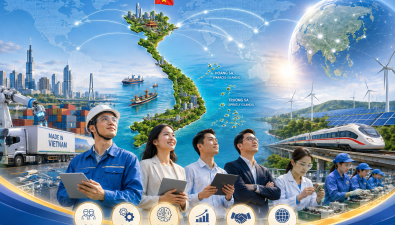
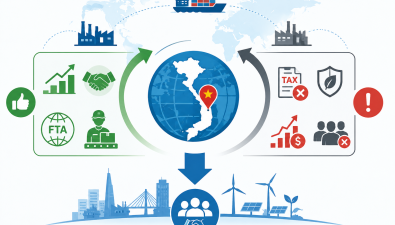
An effective export ecosystem requires strong connections among capital, market intelligence, logistics, technology, standards, digital platforms, and buyers.
These elements cannot operate effectively in isolation. Market intelligence guides product development and compliance requirements. Technology strengthens production capabilities. Capital supports investment and order fulfillment. Logistics moves products to market. Digital platforms expand market reach. Data helps connect the right business partners. Buyers, in turn, generate demand and market signals that drive the supply chain forward.
When these links work together, businesses—especially small and mid-sized enterprises—can lower the cost of entering global supply chains, shorten time to market, and strengthen their international competitiveness.
As global supply chains continue to evolve, Vietnam's advantage lies not only in its manufacturing capabilities, but also in its ability to effectively connect international buyers with a reliable network of domestic suppliers.
For Vietnamese products to compete and grow globally, more is needed than an e-commerce platform or a trade promotion campaign. What is needed is an ecosystem capable of connecting the right market – the right buyer – the right supplier – the right standards – at the right time.
This is the foundation that can help Vietnamese businesses move beyond simply being visible in global markets to becoming trusted, qualified suppliers and valued participants in international supply chains.
Source: VnEconomy – Nguyệt Hà (September 8, 2026)
“A Comprehensive Export Ecosystem: A Launchpad for Vietnamese Products to Reach Global Markets”